

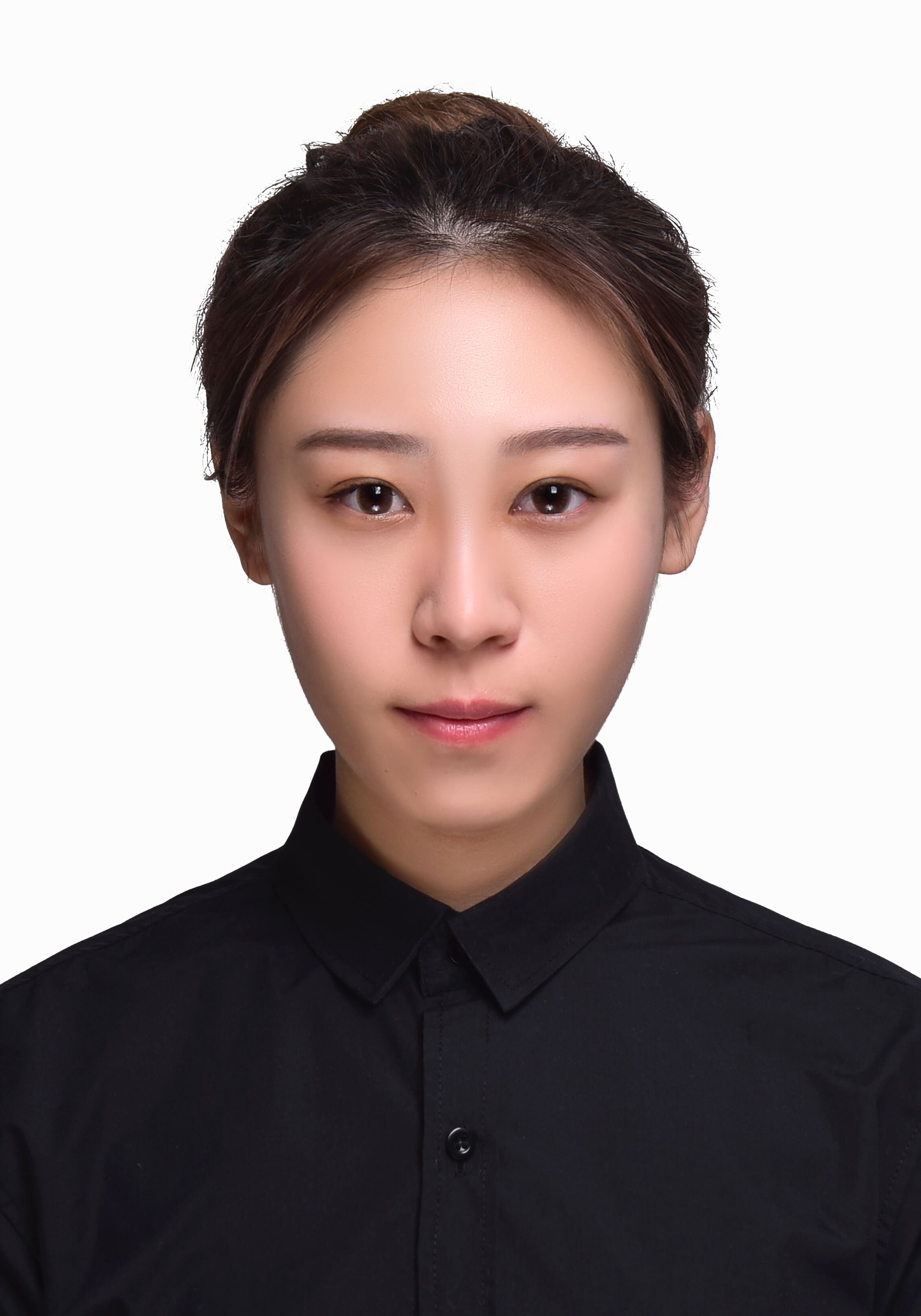
Yaoying Wang
Berlin
Summary
Highly-motivated employee with desire to take on new challenges. Strong work ethic, adaptability, and exceptional interpersonal skills. Adept at working effectively unsupervised and quickly mastering new skills.
Overview
5
5
years of professional experience
Work History
Junior Sensor Simulation Expert
DB InfraGO GmbH
Berlin
07.2023 - Current
- Developing and validate high-fidelity digital twins of perception sensors, focusing on camera and LiDAR modalities.
- Conducting simulation-based safety verification against railway standards and norms.
- Integrating physically realistic models in NVIDIA Omniverse software for virtual testing scenarios.
- Researching state-of-the-art methods in sensor simulation and contributed to ongoing innovation efforts.
Sensor Simulation Intern
DB Netz AG
Berlin
10.2022 - 06.2023
- Built virtual representations of optical sensors in Omniverse with physics-based realism.
- Automated and optimized sensor placement and evaluation within digital railway environments.
- Supported digital engineering workflows and collaborated across simulation and safety teams.
LiDAR Data Labeler
LIANGDAO GmbH
Berlin
03.2022 - 06.2022
- Labeled and validated 3D point cloud data for object detection and semantic segmentation tasks.
- Participated in software testing cycles for labeling tools used in autonomous driving development.
Master Thesis
Technische Universität Berlin
Berlin
04.2022 - 02.2023
- Title: Development of an algorithm to to find relevant plants along a railway
- Grade: 1.0
Project: Object Detection Models Evaluation
Technische Universität Berlin
Berlin
10.2021 - 03.2022
- Compared 2D/3D object detectors based on A2D2 dataset, evaluated metrics e.g., precision-recall, AP, F1 score for autonomous perception.
Project: Battery Design & Simulation
Technische Universität Berlin
Berlin
10.2020 - 03.2021
- Applied Kalman filter and balancing algorithms to reduce SOC variance across battery packs below 5%.
Project: Diesel Engine Modeling
Technische Universität Berlin
Berlin
10.2020 - 03.2021
- Built and optimized engine simulation models using statistical tests (e.g., D-opt, T-test).
Education
M.Sc. - Automotive Systems
Technische Universität Berlin
Germany06.2023
B.Sc. - Electrical Engineering and Automation
Dalian Maritime University
China07.2019
Skills
- Python
- 3D modeling
- C
- MATLAB/Simulink
- NVIDIA Omniverse integration
- ROS2
- Git
- OpenCV
- Linux
- JIRA
- Sensor Simulation
- Photogrammetry
- Perception Systems
- Camera Modeling
- Object Detection & Tracking
- Deep learning
Languages
Chinese (Mandarin)
First Language
English
Advanced (C1)
C1
German
Upper Intermediate (B2)
B2
Timeline
Junior Sensor Simulation Expert
DB InfraGO GmbH
07.2023 - Current
Sensor Simulation Intern
DB Netz AG
10.2022 - 06.2023
Master Thesis
Technische Universität Berlin
04.2022 - 02.2023
LiDAR Data Labeler
LIANGDAO GmbH
03.2022 - 06.2022
Project: Object Detection Models Evaluation
Technische Universität Berlin
10.2021 - 03.2022
Project: Battery Design & Simulation
Technische Universität Berlin
10.2020 - 03.2021
Project: Diesel Engine Modeling
Technische Universität Berlin
10.2020 - 03.2021
M.Sc. - Automotive Systems
Technische Universität Berlin
B.Sc. - Electrical Engineering and Automation
Dalian Maritime University